Lucius Shepard on JK Potter
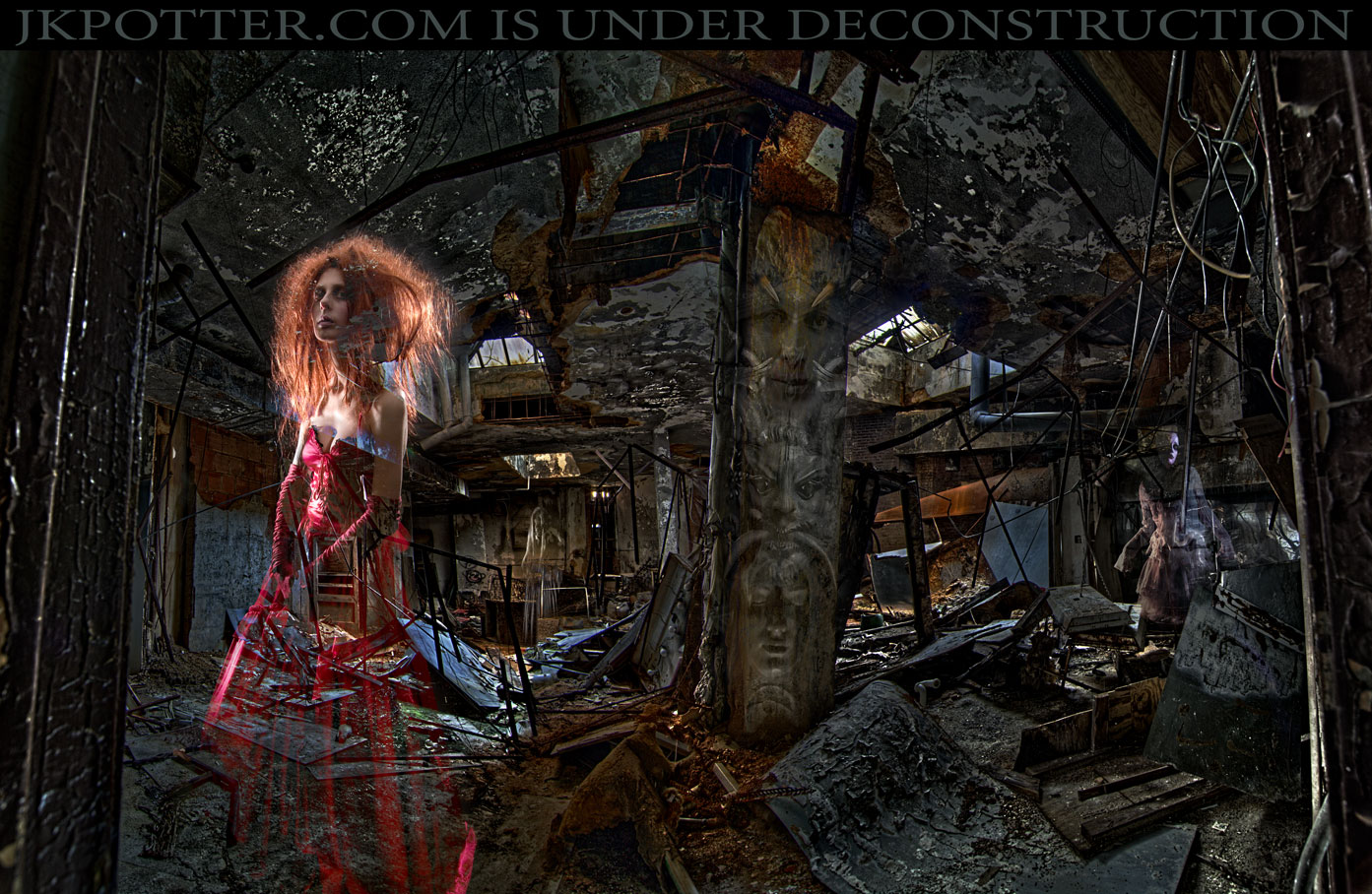
Using words to attempt to explain why art is good strikes me as being something of the order of trying to explain a cow by showing someone a crab, and though I am sure that there is a deconstructionist out there somewhere who will be able to analyze JK's considerable body of work and offer a succinct definition of the man, to state what his every line and image connotes, and how his presence affects the technicolor shadows of some post-modern consensus reality, I'm afraid that I am incapable of this sort of thing and am reduced to saying why his work pleases me. Mainly it pleases me because it is passionate. I admire passion in art, in fact, I find it absolutely essential. Mere cleverness, which is the hallmark of so much work nowadays, be it fiction or art or music, bores the hell out of me. JK's art, though it is smart, painstakingly crafted, and not devoid of cleverness, is essentially an act of passion, full of passionate excesses and articulations, and when any thinking person looks at a large number of his pieces in sequence, that person is not moved to point out sly little conceits and say Oh, look at that, or Isn't that cool, but rather is struck by the powerful dynamic underlying the whole of the portfolio, by the idiosyncratic and furious sensibility that steams up from the paper. It is quite clear that the artist who created these windows into eccentricity and madness and grief and love and sensuality is someone with an extreme take on life, someone to whom the word "casual" in no way applies. And though many of the images are bizarre, it is not really their bizarreness that produces a strong reaction in the beholder, but their innate coherence, their place in what is an intensely felt and richly realized symbology with it's roots in the culture and traditions of the American South.
Simply put, JK Potter--like Man Ray and Diane Arbus before him--is a creator of images worthy of our most serious attention. I believe that the best is yet to come for JK, that in the years ahead he will refine and broaden his vision. He has no choice in this, because when art arises from passion, the artist--like the lover--will always be challenged to find more profound means of expression.